Price Visibility Controls

Customizable pricing & product visibility

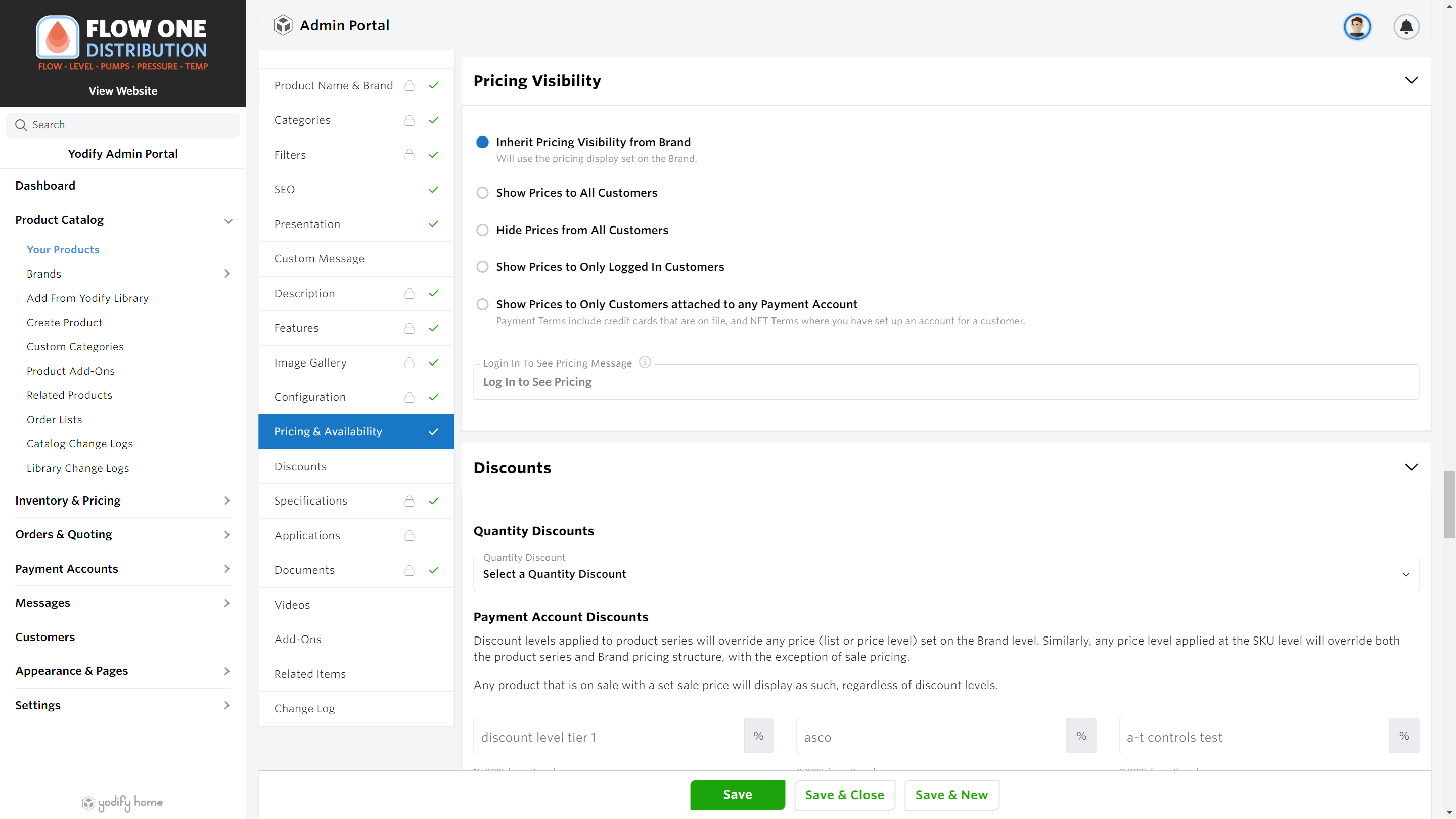
Pricing Visibility Controls

Yodify price visibility controls let you determine who sees what price and when.

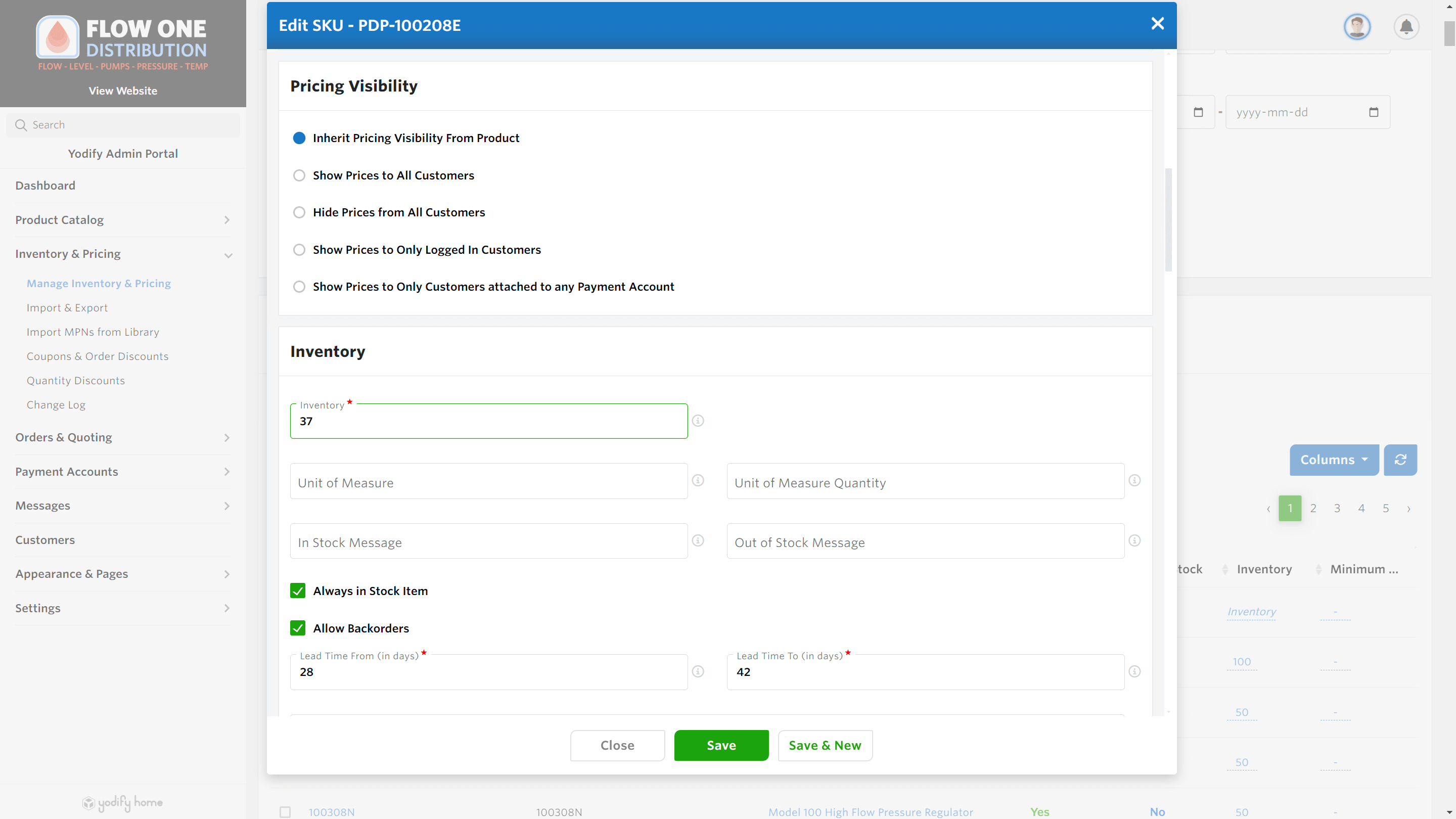
With cascading controls, you can set pricing visibility by brand, product series, or the SKU level.
Customizable pricing & product visibility
Customize your prices to individual customers by using the Payment Account functionality, assign unique prices and/or discounts to your customers.

The Product Visibility functionality enables you to exercise complete control over who can see specific products. Show what you want, to who you want.
Incentivize sign-ups
Set your pricing as available to Logged In Users Only to encourage new visitors on your site to create an account, launching their engagement with your business.
Discrete pricing
By showing your pricing only to customers who have a Payment Account with you, you can ensure your pricing remains customer-specific with zero cross-contamination of your curated pricing structure.
Intelligent merchandising
Businesses have a range of products, from a basic commodities to highly customized.

Make your commodity products available for purchase, while restricting access to pricing on other brands or models.
Completely Customizable
Set pricing visibility by brand
Override or set new visibility rules at the product series level
Control your pricing visibility even at the SKU level
Granular Control
Set up your pricing visibility quickly at the brand level, or take fine control and set overrides at the product series or SKU level.
Individual Catalog Experiences
Take price visibility a step further and deliver bespoke catalog content to each account holder with Account Groups.

FAQs

Yes. By default, SKUs inherit their price visibility from the Product Series, which inherits its price visibility from the Brand.

The pricing visibility hierarchy for inheriting pricing visibility from the brand is as follows:

Brand > Product Series > SKU

Example: When you've selected to inherit the pricing visibility from the brand, you can still change that for a given product or SKU, giving you high-level and granular control concurrently. This offers:

Simplified management
Inheriting pricing visibility from the brand simplifies administrative tasks for store managers. Instead of setting visibility rules for each product individually, they can apply the brand’s predefined rules..

Efficiency in multi-brand stores
In stores that sell multiple brands, inheriting pricing visibility from each brand allows for efficient management of diverse pricing strategies, ensuring each brand’s policies are respected and correctly implemented.
Marketing and promotional strategies
Brands often have specific marketing and promotional strategies that include pricing visibility. By inheriting these strategies, online stores can effectively participate in brand-wide campaigns, promotions, and sales events.
Compliance and legal considerations
Brands often set pricing visibility rules to comply with regional regulations and legal requirements. By inheriting these rules, online stores ensure they adhere to the necessary legal standards without needing to manage compliance independently.
Competitive positioning
Brands typically have a well-researched understanding of market positioning. Inheriting their pricing visibility helps maintain the intended competitive stance in the marketplace, ensuring that pricing strategies align with broader market tactics.
Customer expectations
Customers often have expectations based on their experiences with the brand. Inheriting pricing visibility from the brand helps meet these expectations, fostering trust and loyalty among customers who are familiar with the brand.
Coherent pricing strategy
For brands with multiple retailers or online stores, a coherent pricing strategy ensures that customers receive the same pricing information, reducing confusion and potential conflicts between different sales channels.
Enhanced brand collaboration
Following the brand’s pricing visibility guidelines can strengthen the relationship between the store and the brand, leading to better collaboration, support, and potentially more favorable terms or exclusive deals.
text here
text here
text here
text here

Yes. By showing prices to every user, an online store enhances the shopping experience, builds trust, and can ultimately increase sales. This provides:

Transparency
Clear pricing builds trust with customers. When users can see prices upfront, they feel more confident that the store is honest and reliable.
Convenience
Displaying prices saves customers time. They don't have to go through additional steps, such as contacting customer service or adding items to their cart, just to find out how much something costs.
Impulse Buying
Visible prices can encourage impulse purchases. When customers see an affordable price, they are more likely to make a quick buying decision.
SEO Benefits
Search engines can index price information, which can improve the store's search engine ranking for price-related queries.
Competitive Advantage
In a market where customers often compare prices across multiple sites, having prices visible can attract more customers. Hidden prices can frustrate potential buyers and drive them to competitors who are more transparent.

Yes. Keep in mind, while hiding prices can have benefits, it also comes with risks, such as frustrating potential customers or reducing the perceived transparency of the business. Therefore, this strategy should be used thoughtfully, typically accompanied by clear communication and excellent customer service. Hiding prices from every user on an online store can be strategic in certain contexts.

Customization and flexibility
For products or services that require custom quotes based on specific customer needs, hiding prices allows for flexibility in pricing. This is common in B2B markets where prices can vary widely based on order size, customization, and negotiated terms.
Lead generation
By not displaying prices, stores can encourage potential customers to contact them for more information. This can help generate leads and allow the store to gather customer information for follow-up and marketing purposes.
Competitive reasons
Hiding prices can prevent competitors from easily seeing and undercutting your prices. This can be a strategic move in highly competitive industries.
Market segmentation
If a business serves different market segments with varying pricing strategies, hiding prices allows the store to tailor quotes to the specific segment, ensuring that each customer receives a price that reflects their purchasing power and the value they place on the product.
Value-based pricing
When the value of a product or service is not immediately apparent, hiding prices can encourage potential customers to engage more deeply with the content, learn more about the benefits, and understand the value proposition before seeing the cost.
Dynamic pricing
For businesses using dynamic pricing strategies, where prices fluctuate based on demand, market conditions, or customer profiles, hiding prices can simplify the presentation and avoid confusion.
Complex products
For complex products that require a detailed explanation or customization (e.g., industrial machinery), the price may depend on multiple factors that need to be discussed with the customer.

Absolutely. This strategy can enhance customer engagement and loyalty while also protecting the store's competitive edge and optimizing pricing strategies. However, it's important to balance this approach with user experience considerations to avoid frustrating potential customers. Showing prices only to logged-in customers can be beneficial for several reasons:

Customer Segmentation
This strategy allows the store to tailor pricing based on the customer's profile, purchase history, or membership level. It enables personalized pricing strategies that can offer discounts or special prices to loyal or repeat customers.
Building Customer Relationships
Encouraging users to log in fosters a sense of exclusivity and community. It can also help build a relationship with customers by providing them with personalized content, recommendations, and promotions.
Enhanced Data Collection
Requiring login to view prices helps the store collect valuable customer data, such as email addresses, purchase history, and browsing behavior. This data can be used for targeted marketing and improving customer experiences.
Promoting Registration
This approach incentivizes users to create an account and log in, which can increase user engagement and loyalty. Registered users are more likely to return and make repeat purchases.
Dynamic Pricing
Logged-in customers can be offered dynamic pricing based on their buying behavior, location, or other criteria. This allows for flexible pricing strategies that can optimize sales and profits.
Exclusive Offers
Displaying prices only to logged-in users allows the store to offer exclusive deals or member-only discounts, which can encourage more users to register and log in regularly.
Prevention of Price Scraping
By requiring a login to view prices, the store can reduce the risk of competitors easily scraping prices from the website. This can help protect the store's pricing strategies from being undercut.

Yes. Showing prices only to customers with an attached payment account can be strategic. While this strategy can offer several benefits, it is essential to communicate the reasons clearly to customers to avoid frustration and ensure a positive user experience.

Ensuring serious buyers
This approach filters out casual browsers and ensures that only serious buyers who are ready to make a purchase can see the prices. This can improve the quality of your customer interactions and reduce the number of abandoned carts.
Reducing fraud and risk
By linking price visibility to a payment account, the store can reduce the risk of fraudulent activities. It ensures that the user has a verified payment method, which can help in minimizing fraudulent orders.
Encouraging account creation
This strategy can incentivize users to create and link a payment account, increasing the store's customer base and enabling more personalized marketing and engagement strategies.
Customized pricing and offers
It allows the store to offer personalized pricing, discounts, or promotions to customers based on their payment account status, purchase history, and loyalty. This can enhance customer satisfaction and loyalty.
Data security and compliance
For certain products or services, showing prices only to verified payment account holders can help with regulatory compliance and data security, ensuring that sensitive pricing information is only accessible to authenticated users.
Preventing competitive scraping
This measure can protect the store's pricing strategies from being easily accessed and undercut by competitors, as only verified users with a payment account can see the prices.

Flexibility and Control
Merchants can tailor pricing strategies to different customer segments, regions, or product categories with multiple pricing visibility options.

Customer segmentation
Different groups may need different prices:
1. Wholesale customers might see bulk rates
2. Retail customers get standard prices
3. Logged-in users or members could see special discounts or loyalty prices
Market Adaptation
Adjusting pricing for different regions helps merchants adapt to local market conditions and price sensitivities more effectively.
Testing and optimization
Having multiple pricing visibility options allows merchants to test different strategies and optimize for the best performance. A/B testing different pricing visibility settings can provide insights into what works best for different customer segments.
Managing expectations
By controlling pricing visibility, merchants can better manage customer expectations and avoid potential misunderstandings or disappointments related to pricing and availability.

Yes, you can hide prices by territory or region. Hiding prices in restricted shipping regions helps maintain clarity, compliance, and customer satisfaction while streamlining operations and focusing efforts on regions where your store can effectively serve customers.
Avoiding misleading information
If your store does not ship to certain regions, showing prices to users in those regions can be misleading. Hiding prices prevents customers from assuming they can purchase and receive the products when, in reality, shipping is not available to their location.
Preventing frustration
Displaying prices to customers in regions where shipping is unavailable often leads to frustration and a negative shopping experience. By hiding prices, the store can better manage customer expectations and avoid disappointment.
Marketing strategy
This approach can be part of a targeted marketing strategy, ensuring that promotional efforts and pricing strategies are focused on regions where the store can fulfill orders, thereby optimizing marketing ROI.
Preventing unauthorized resellers
By hiding prices in regions where shipping is restricted, the store can reduce the risk of unauthorized resellers purchasing products and reselling them in those regions, which can undermine the store’s pricing and brand strategy.